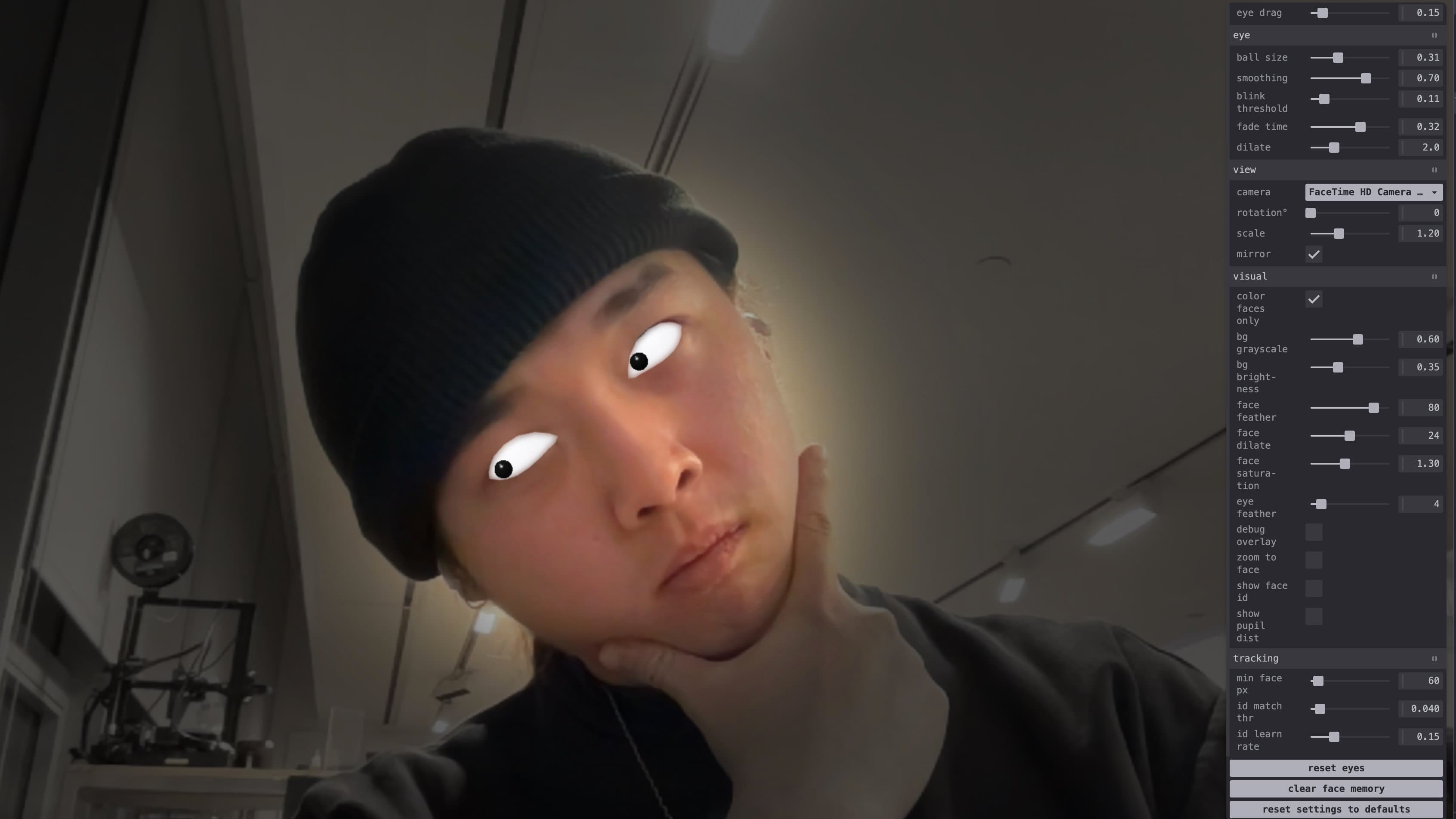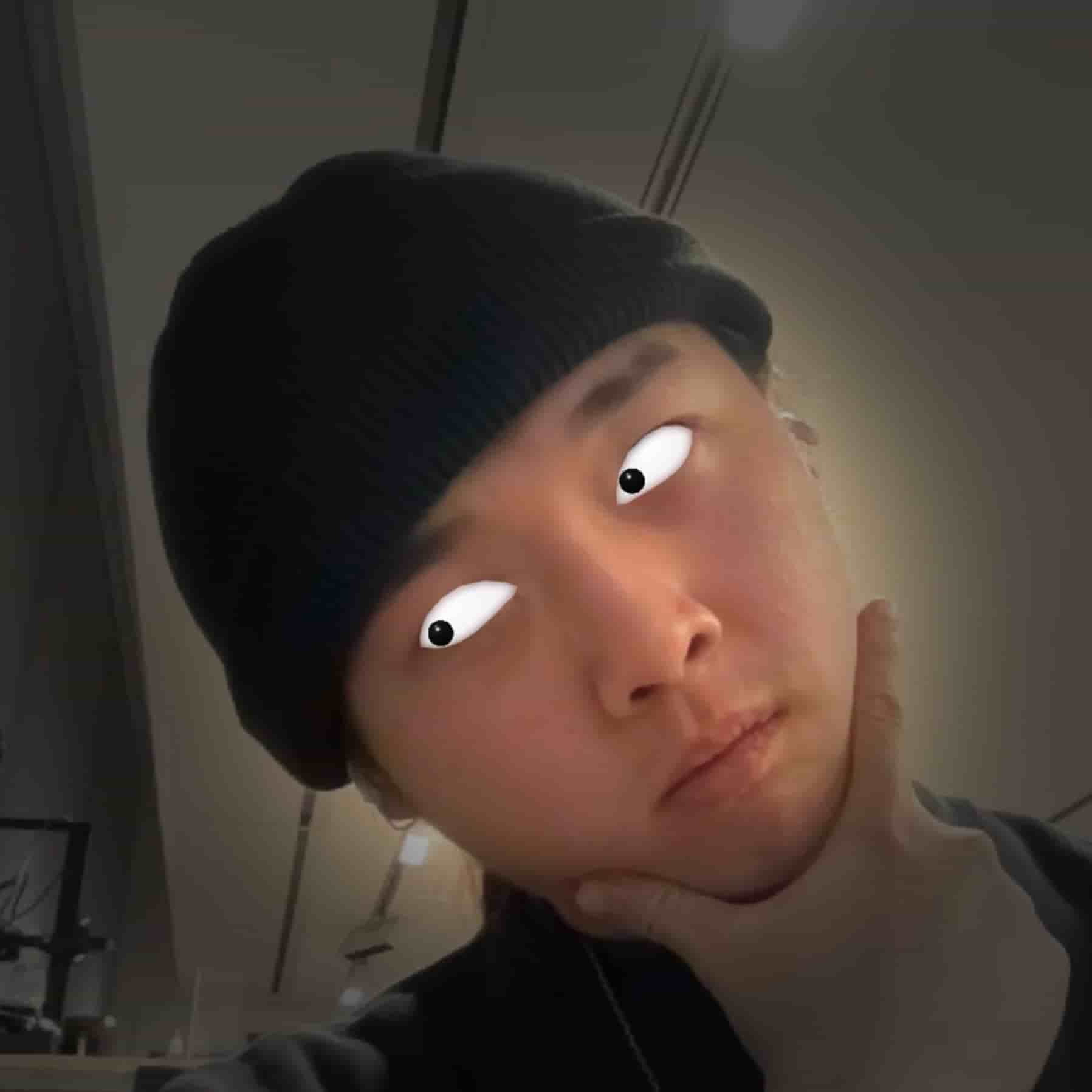
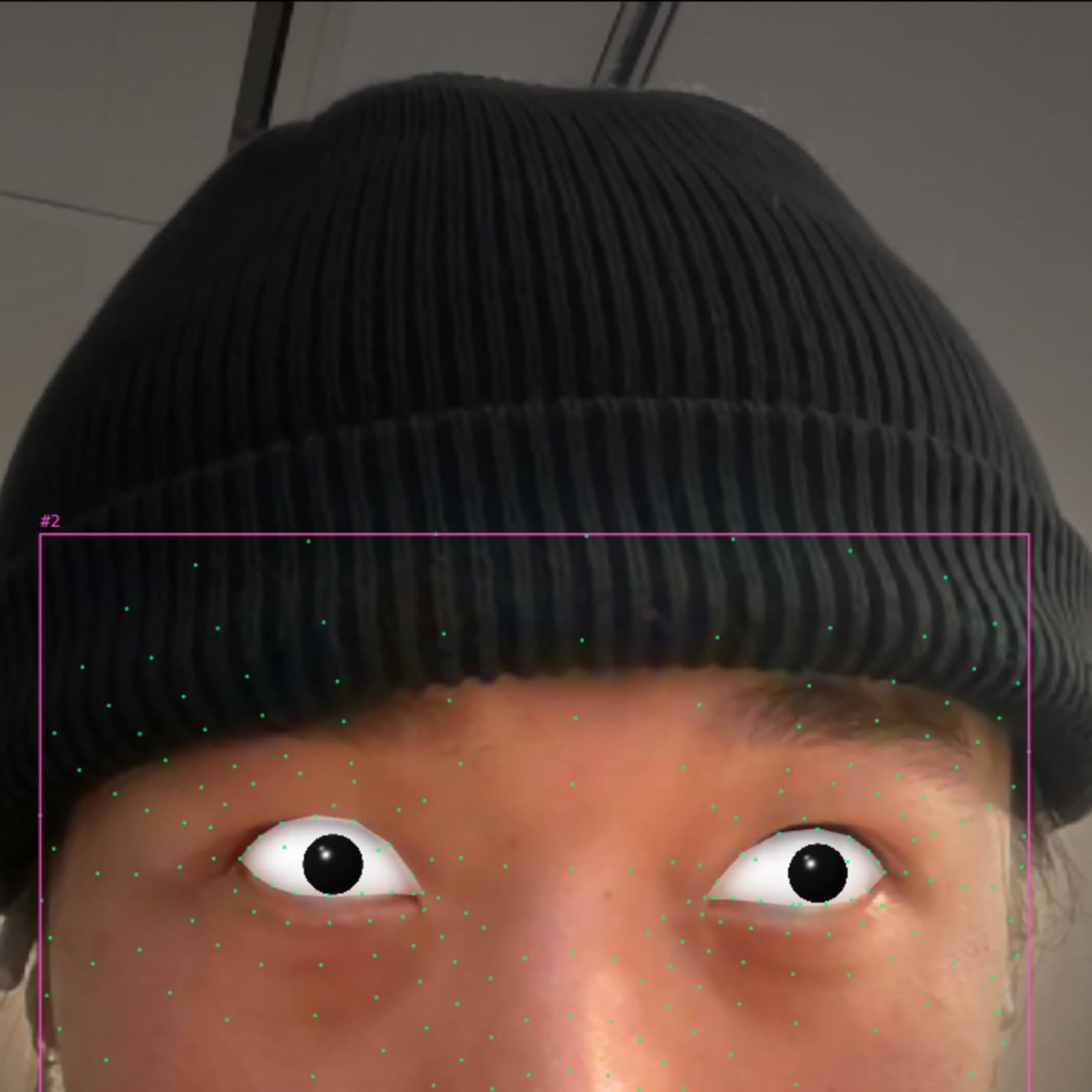
Eye Roller is a browser video mirror that puts a rolling pupil in each one of your eyes. The sockets get painted white, a heavy little pupil drops into each one, and from there it tumbles around under gravity and your head movement.
Prior art
I went looking for prior art before I started, and was glad to realize nobody had done quite the same thing.
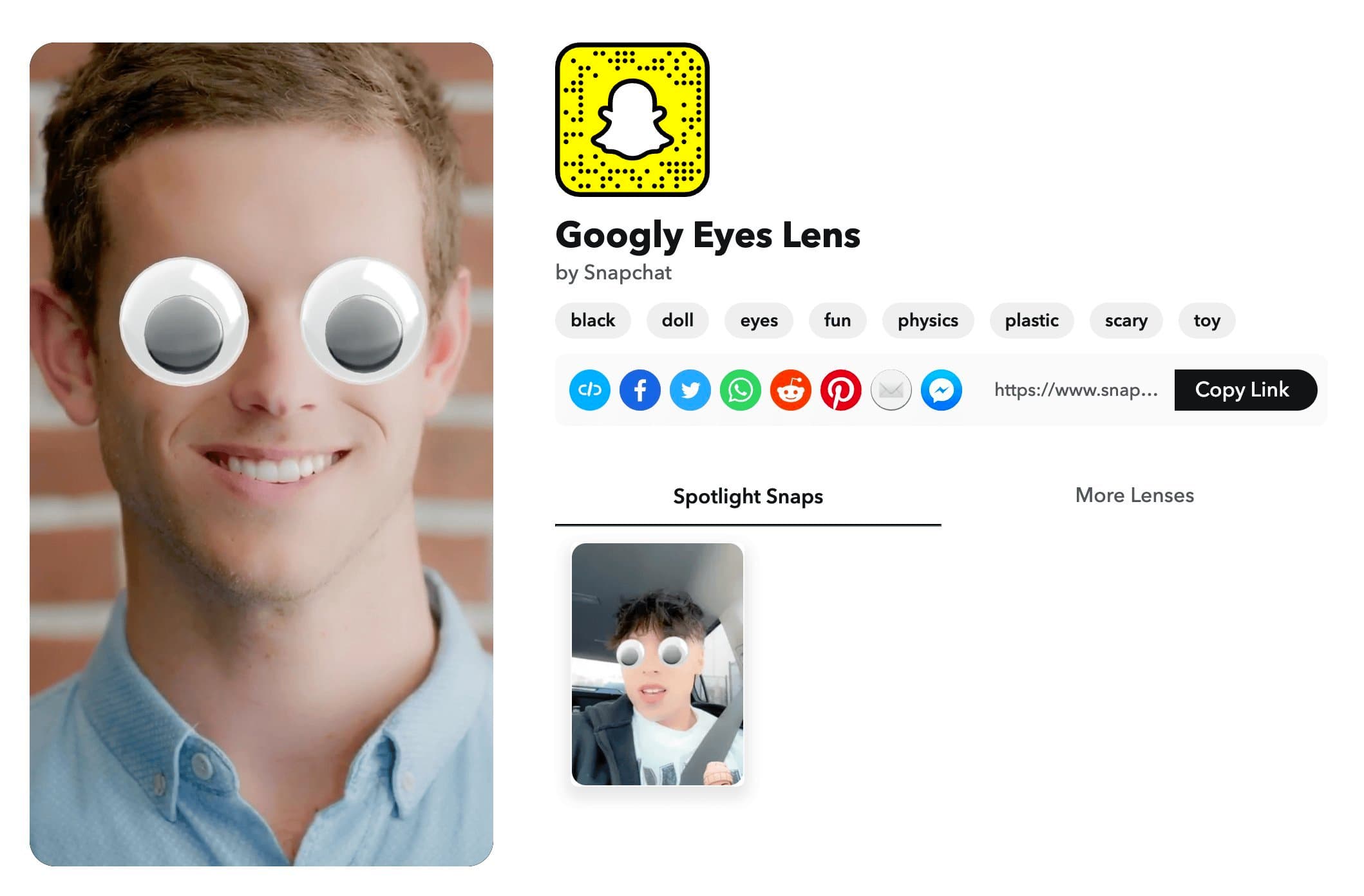
Googly-eye effects on Snapchat and Instagram have been around forever, but
almost none of them simulate physics. Snapchat's official "Googly Eyes"
lens, tagged
#physics, is the clearest exception, but it glues a 3D pair of plastic doll
eyes to your face. Eye Roller is different: it runs in a browser, the socket is
your actual eye contour (so the pupil rolls along your eye, not a cartoon
circle), and it stays 2D, closer to a plastic googly eye stuck to a thing than a
3D object floating in front.
How it works
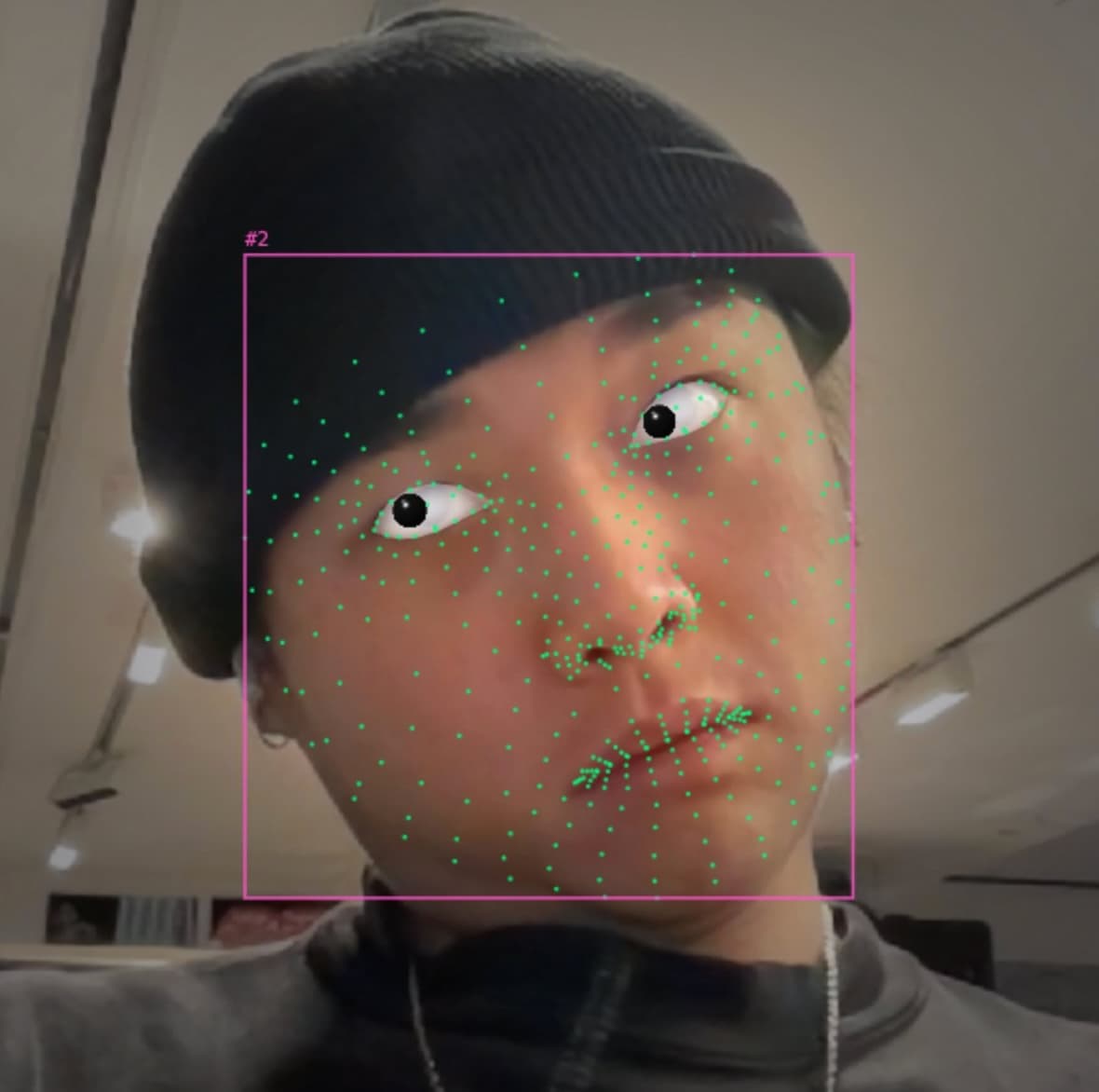
The webcam feeds MediaPipe Face Landmarker, which returns 478 landmarks per face every frame. Each eye contour gets turned into a static collision polygon inside a Planck.js (Box2D) world, with a circle body, the pupil, sitting inside. A soft spring pulls the pupil toward the socket center while gravity and head acceleration push it around. The polygon updates every frame as your eye opens, closes, and moves.
Things you can do to it
Tilt or jerk your head and gravity pools the pupils to the bottom of the socket; head acceleration sloshes them around.
Stand too far from the camera and MediaPipe loses you. A YOLOv11n-face fallback finds you anyway, draws a circle around your head, and prompts you to come closer.
Bring a friend, watch the odometer. Each face gets a lightweight 17-distance geometric signature (eye widths, nose proportions, face height, chin-to-cheek), enough of a hash to tell a small roster apart and keep each person's pupils pinned to them across frame drops. Every pair of pupils has its own odometer too, measuring roll distance in meters (scaled against face width) and totaled per face. Stay long enough and you'll clock a kilometer.
Press c to open a Tweakpane panel with everything exposed: gravity, spring strength, pupil size, blink threshold, dilation, feathering, camera selector. Settings save to local storage.